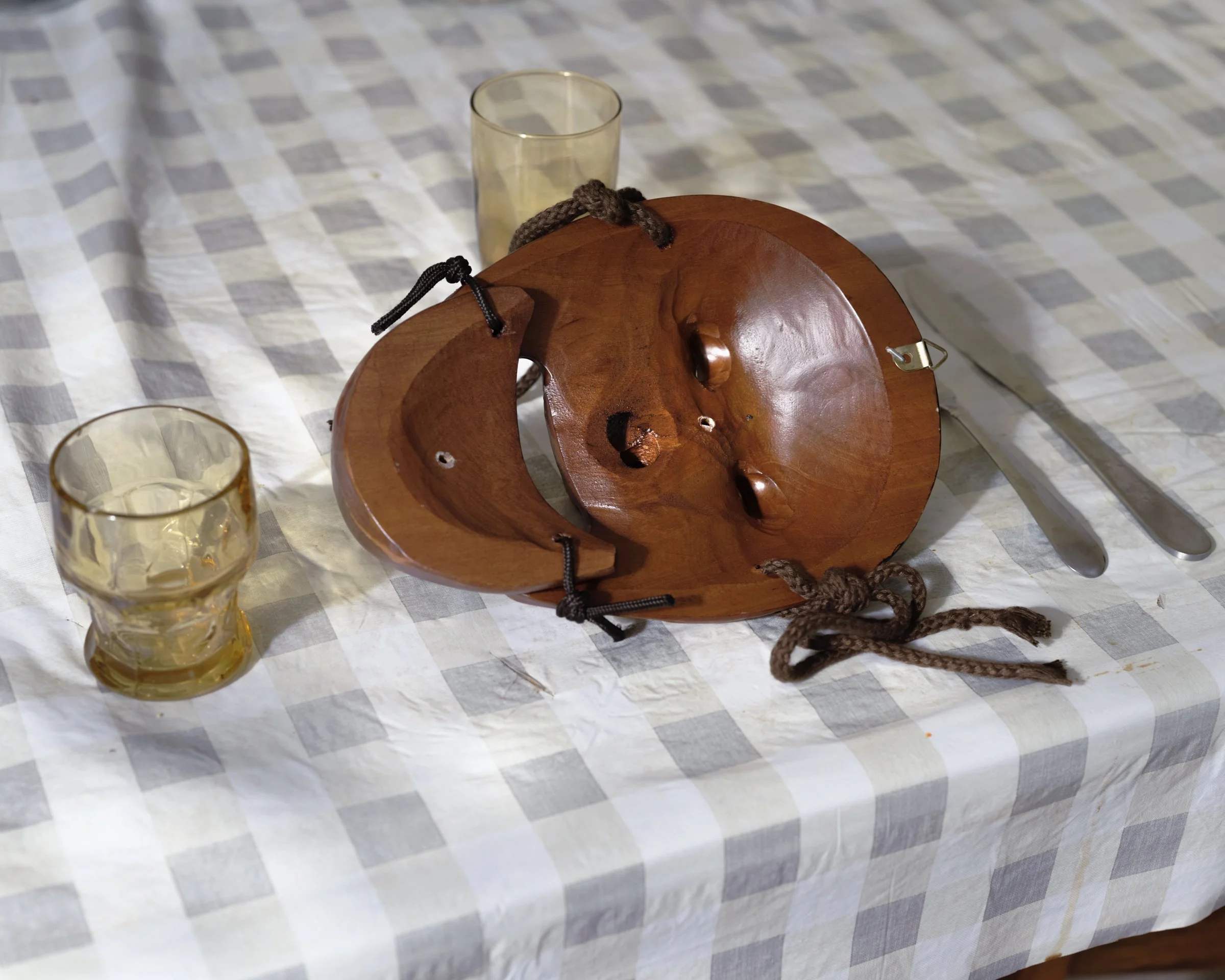
As Within So Without I, 2025, pigment, 15” x 12”
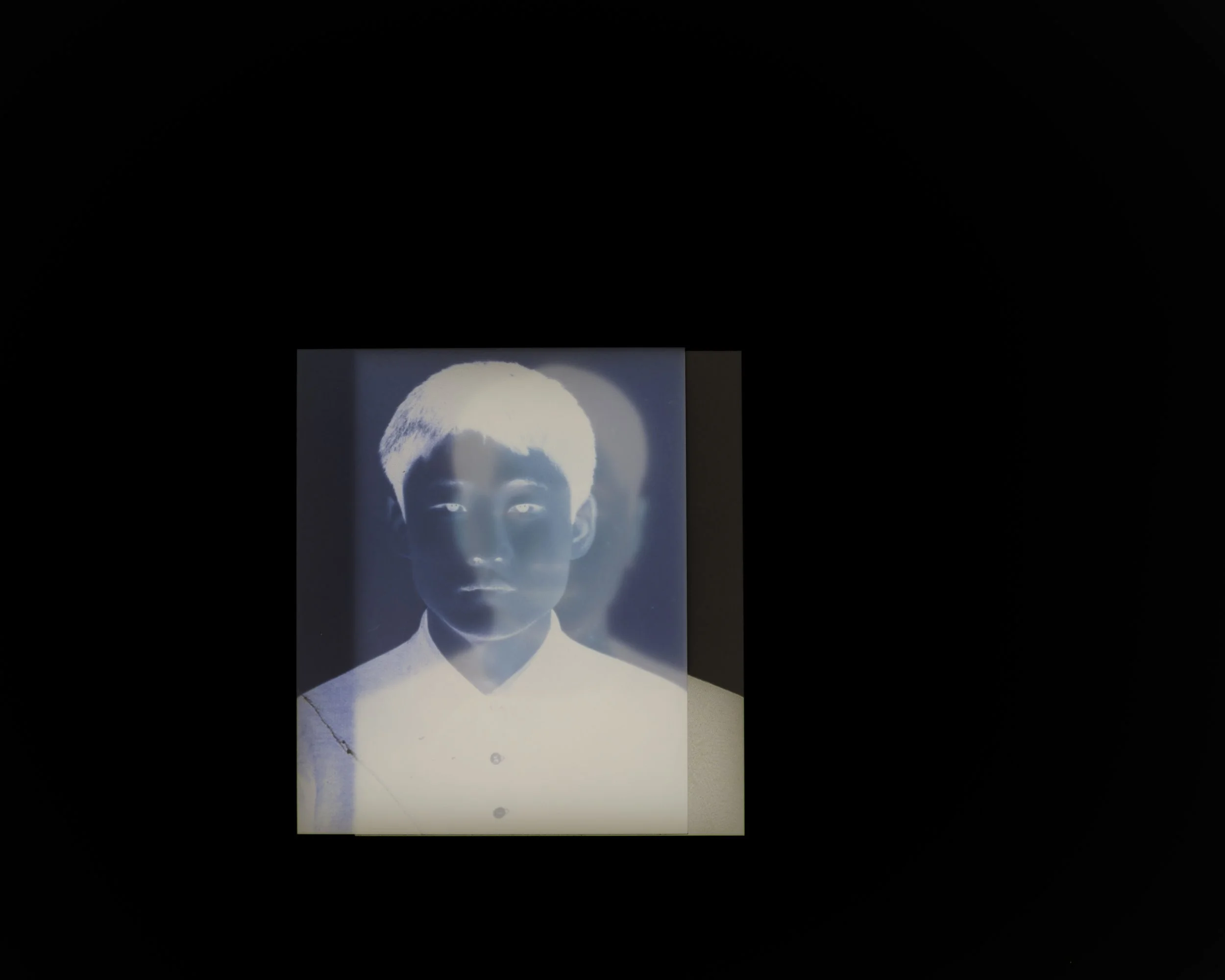
Partial Eclipse, 2026, pigment, 15” x 12”
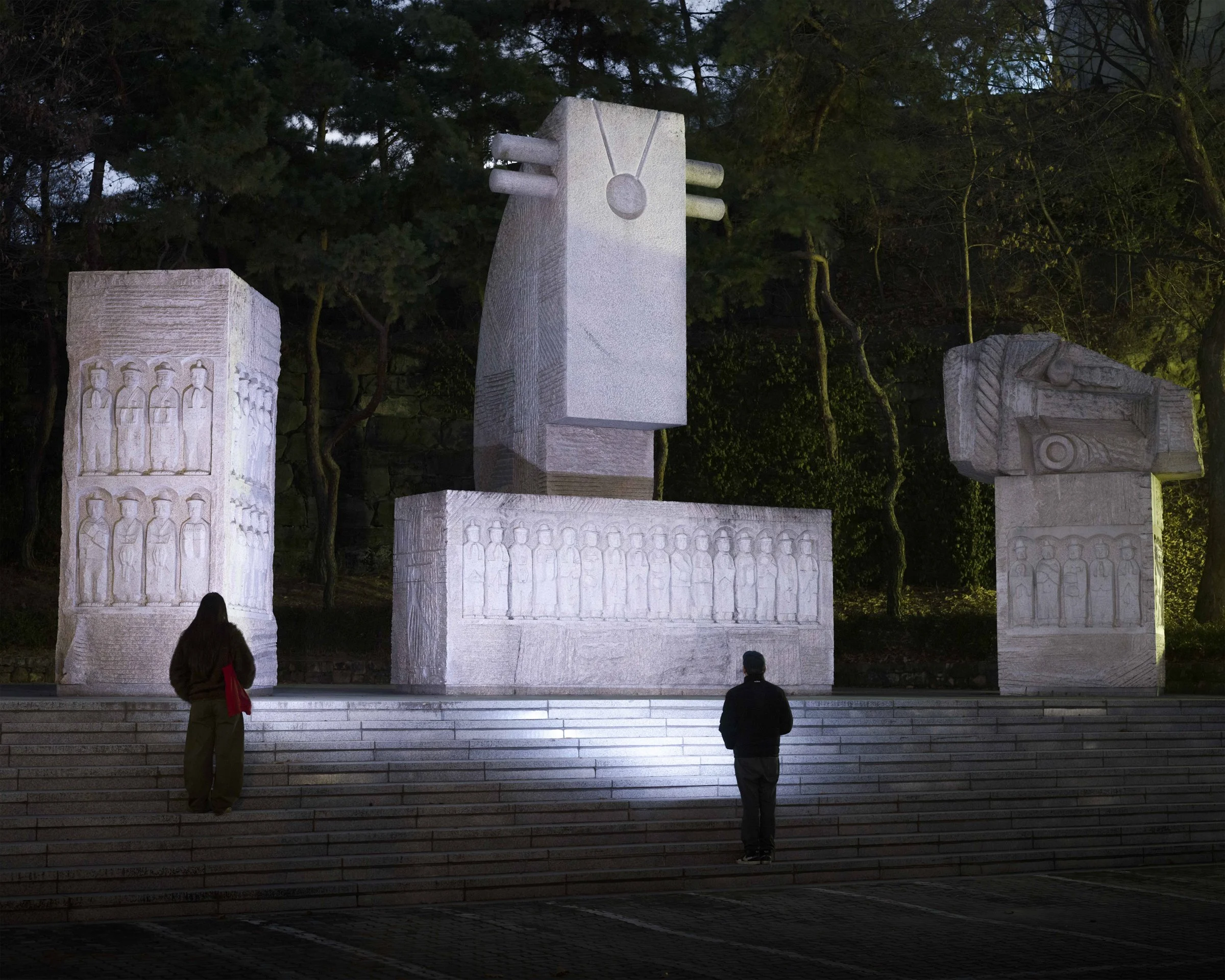
As Within So Without II, 2025, pigment, 16” x 20”
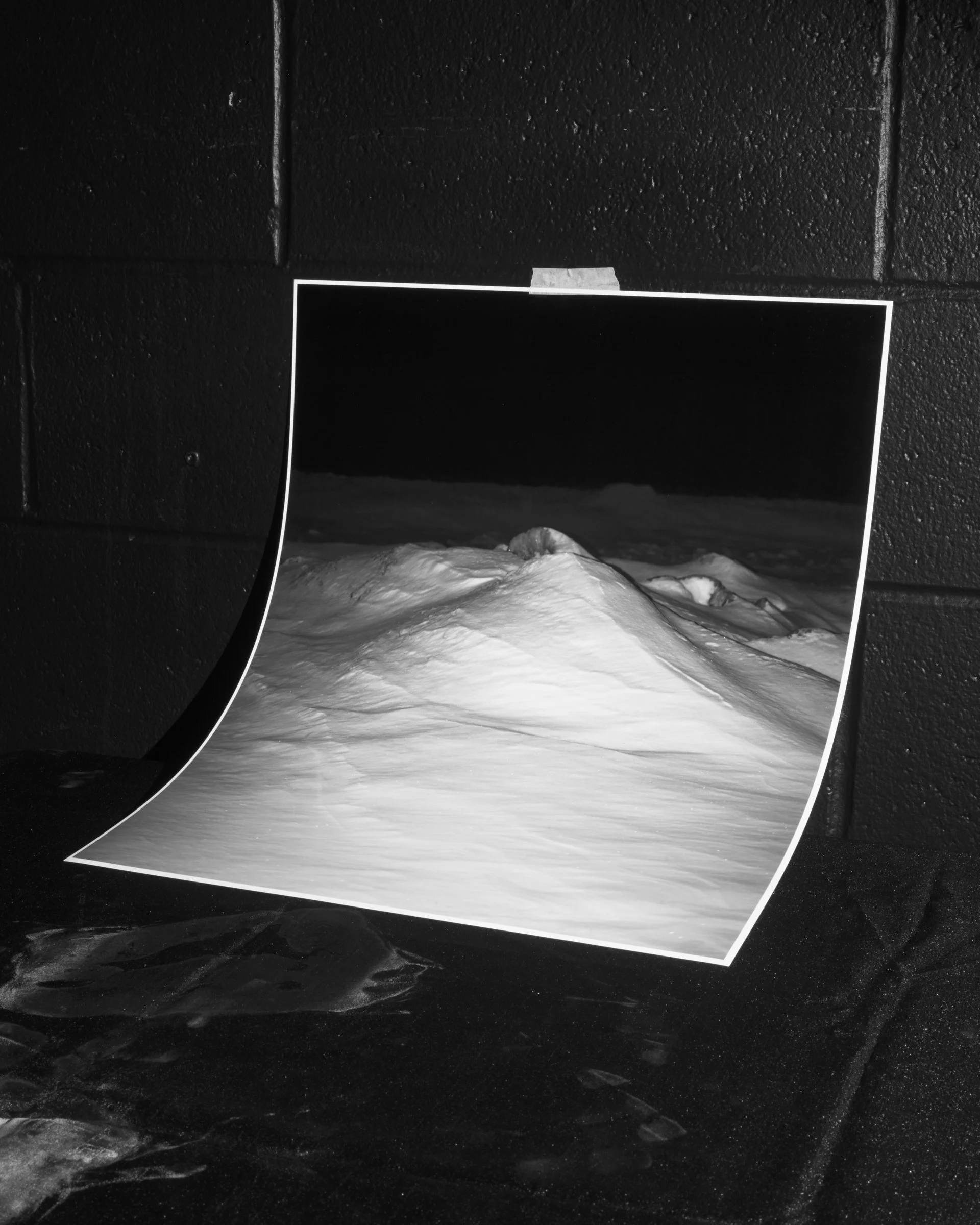
Cave Study I, 2026, digital C-print, 25” x 20”
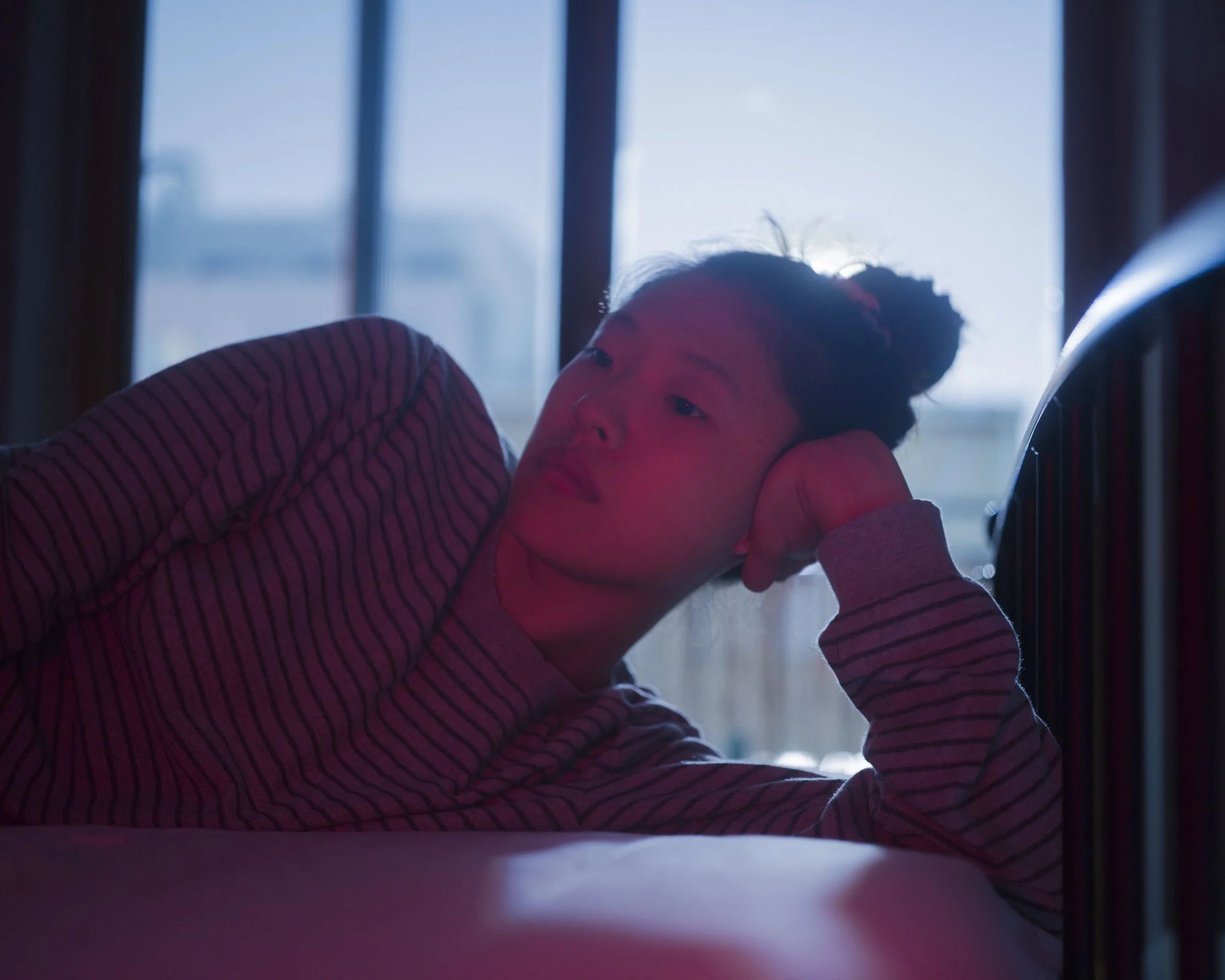
San by the Digital Clock, 2025, pigment, 15” x 12”
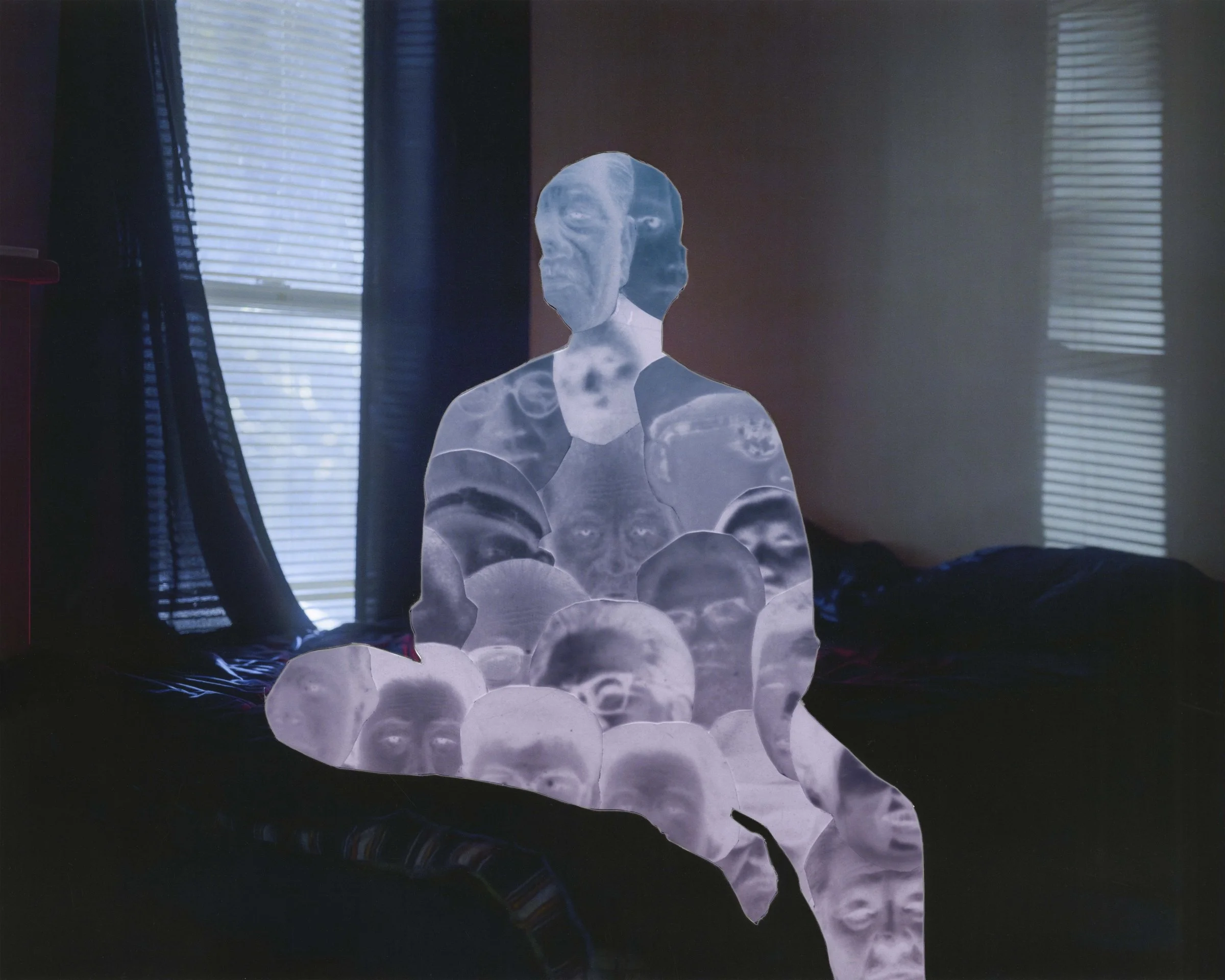
At Night, I Become a Keyhole, 2026, digital C-print and pigment print collage, 20” x 16”
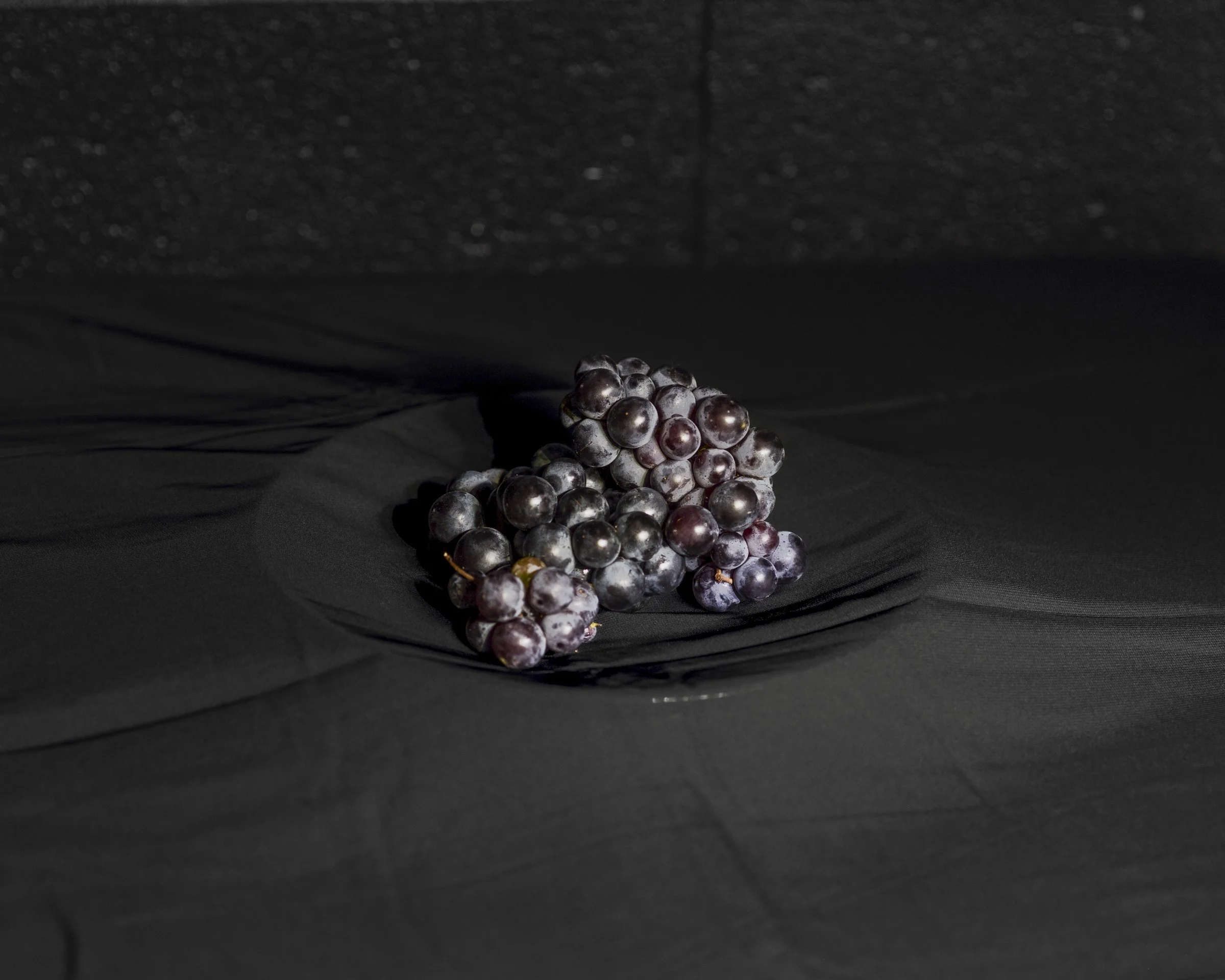
Countless Moons, 2024, pigment, 15” x 12”
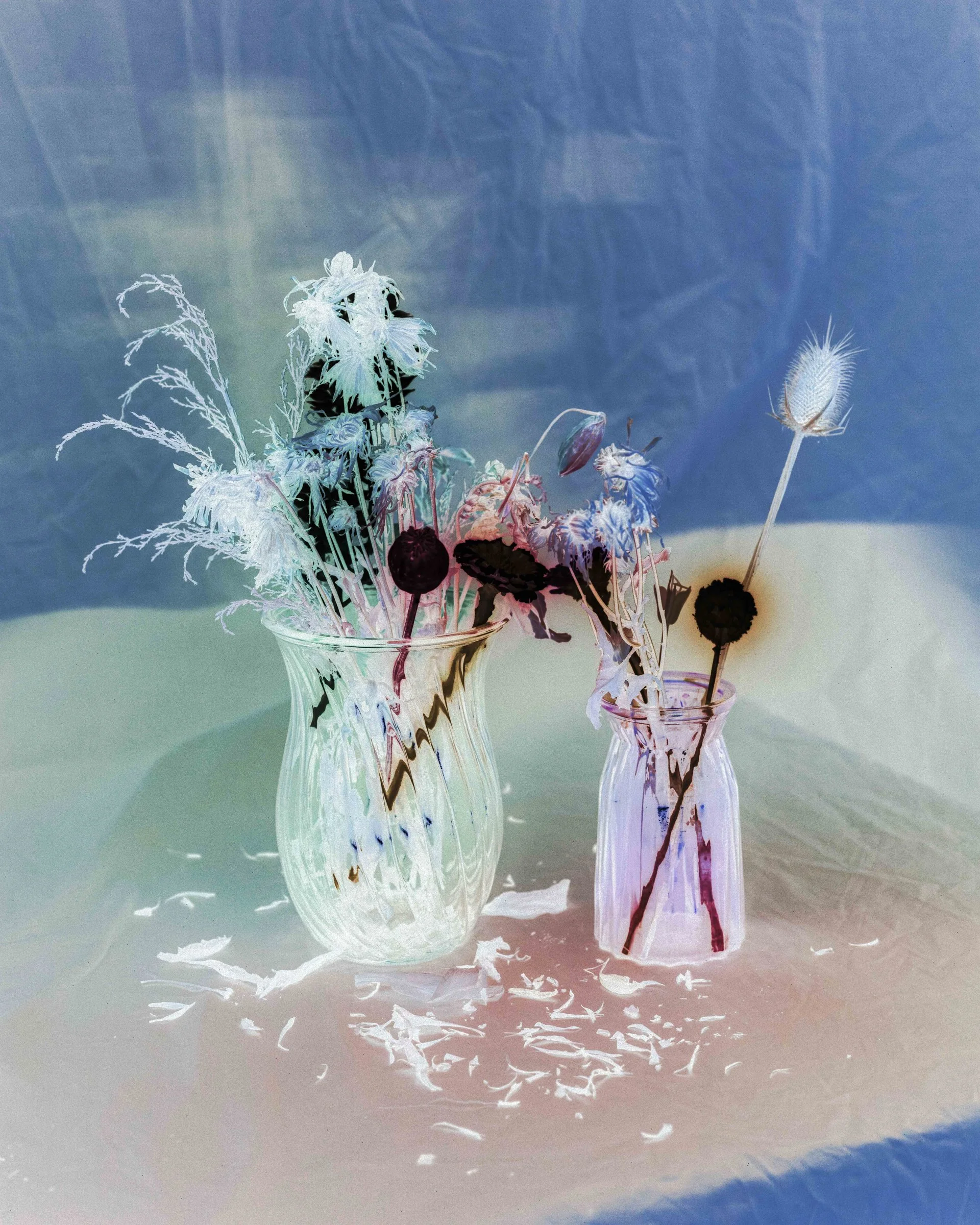
Ghosts at Noon, 2025, pigment, 8” x 6.4”
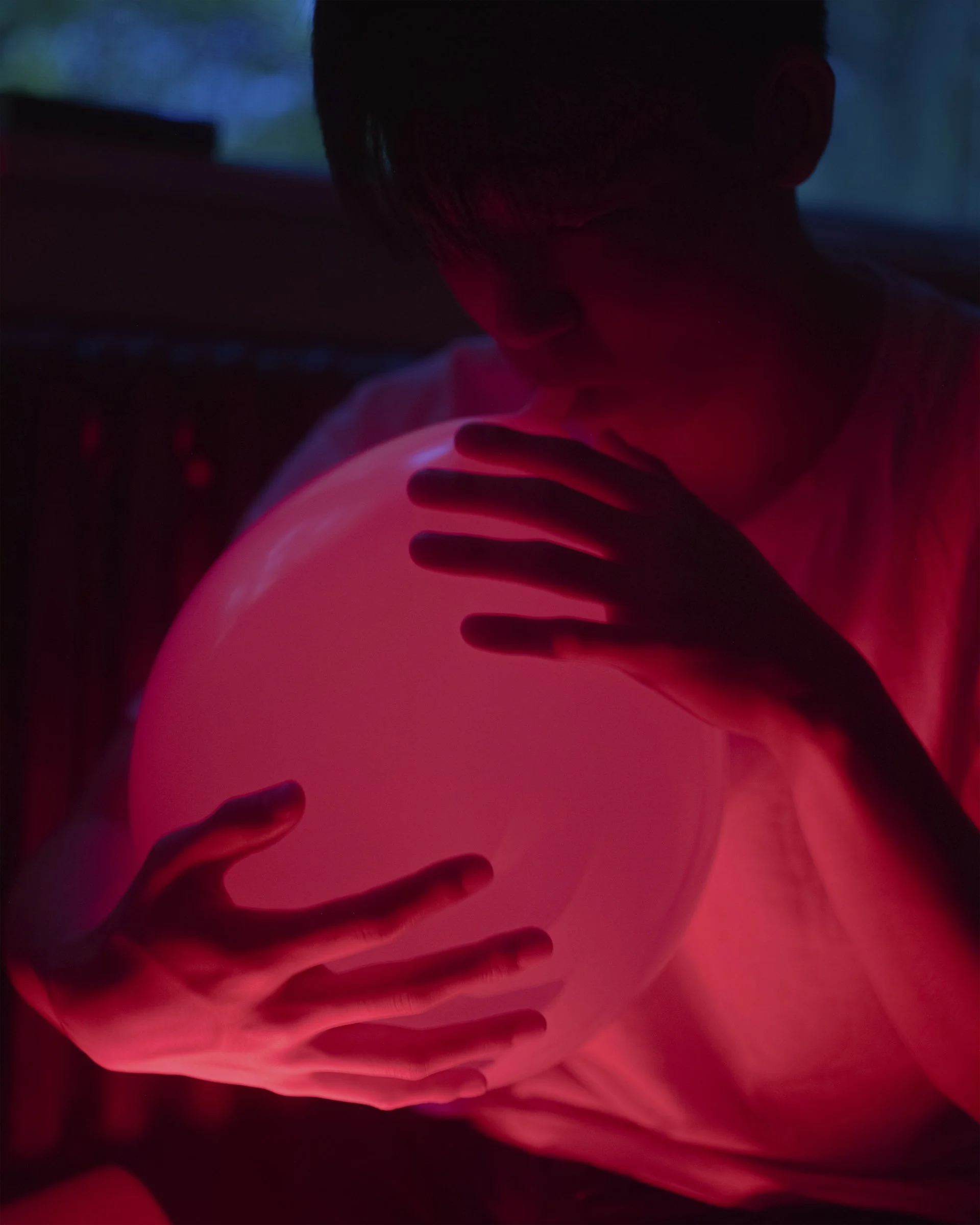
Mokin Blowing a White Balloon, 2025, digital C-print, 25” x 20”
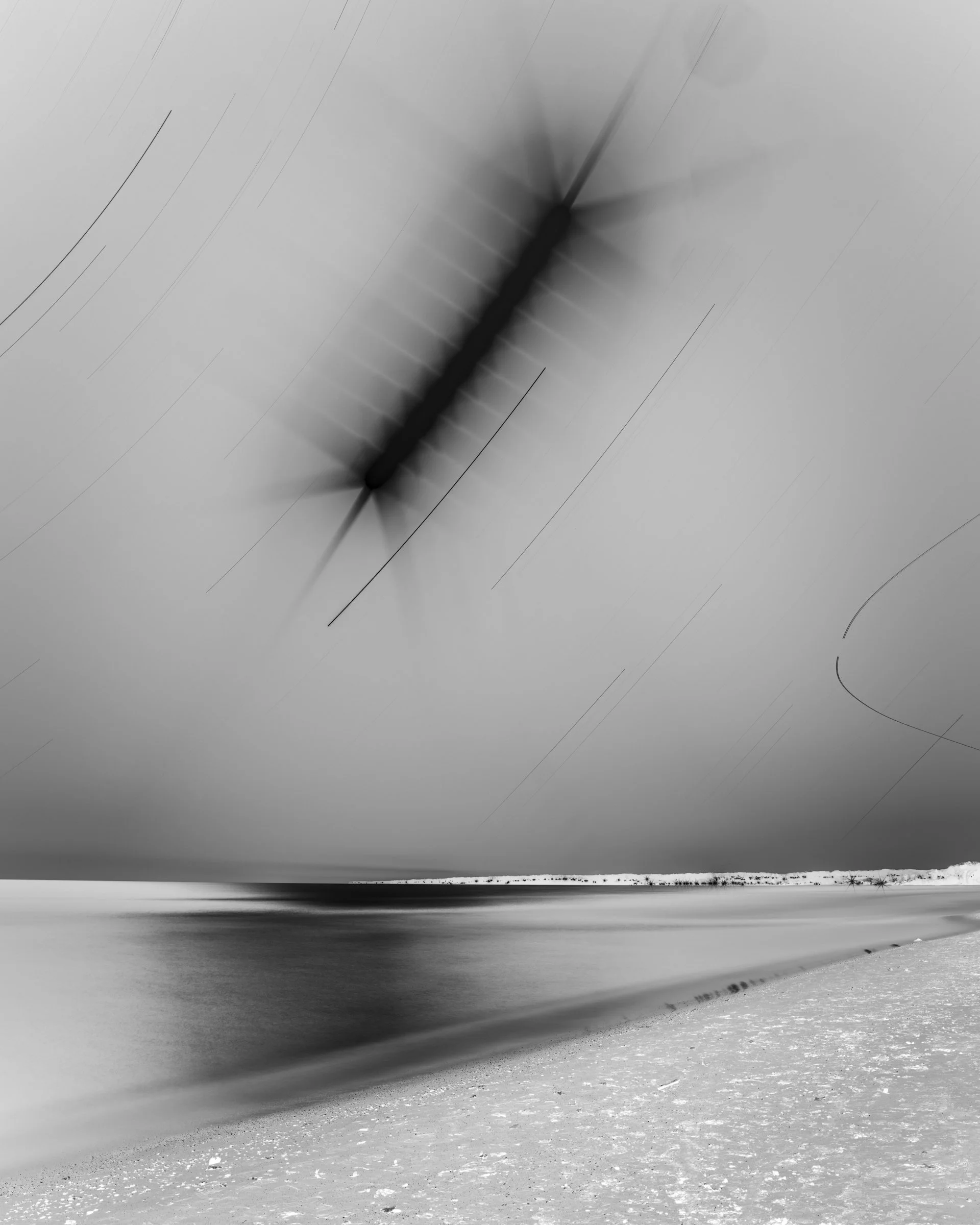
Transfigured Night, 2024, pigment, 10” x 8”
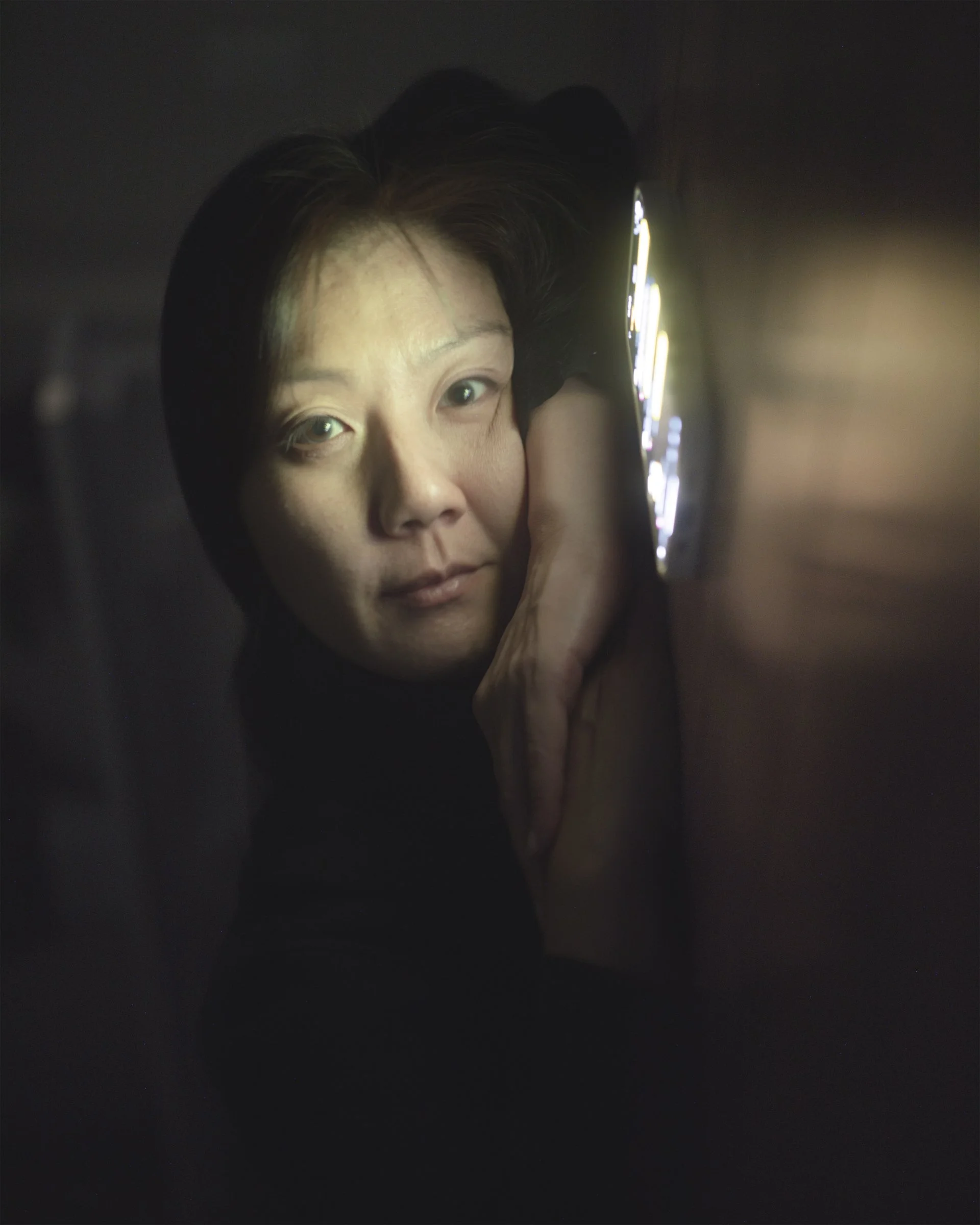
Pam by Her Phone, 2025, digital C-print, 20” x 1.6”
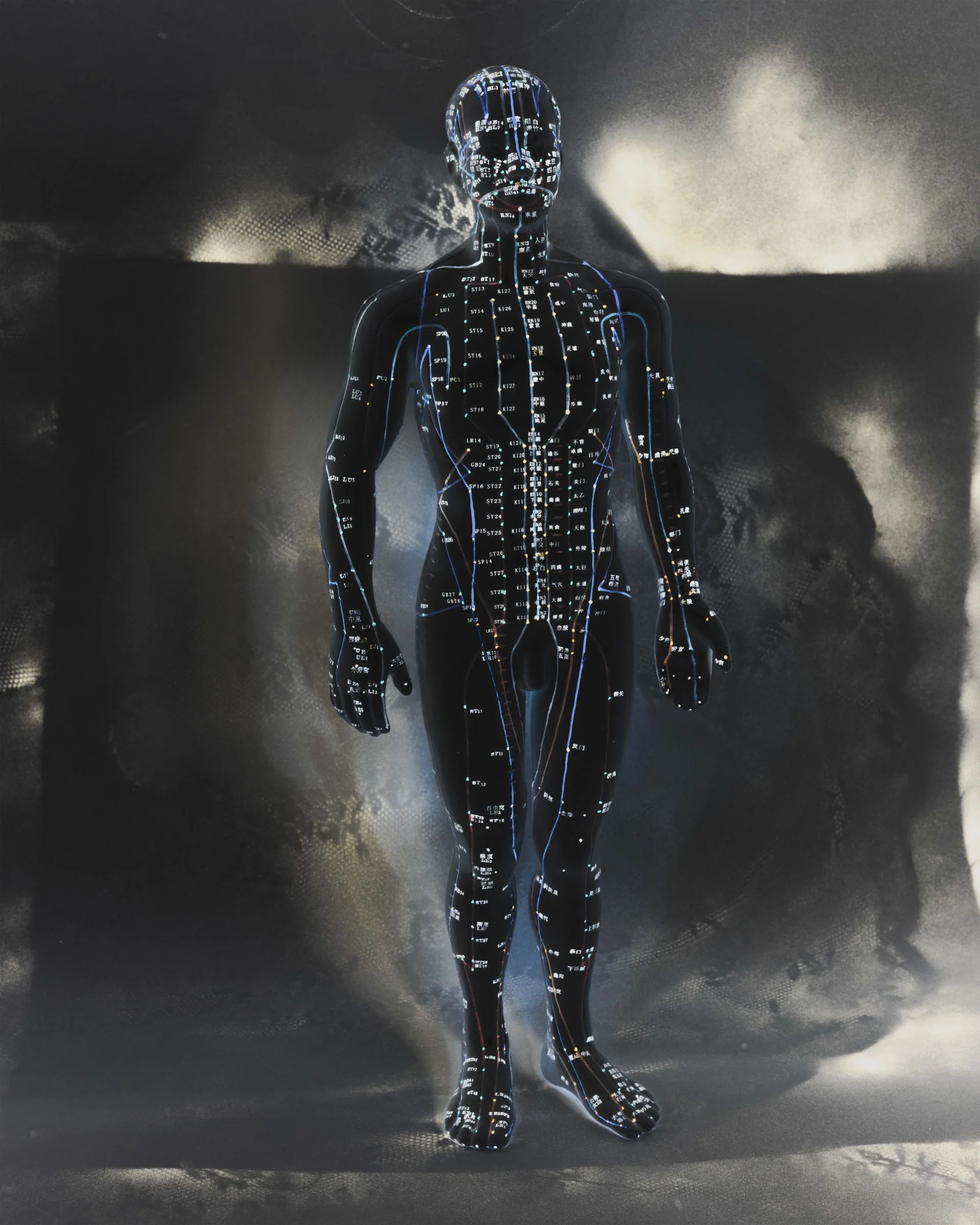
So Many Stars in the Deep Blue Sky, 2025, digital C-print, 25” x 20”
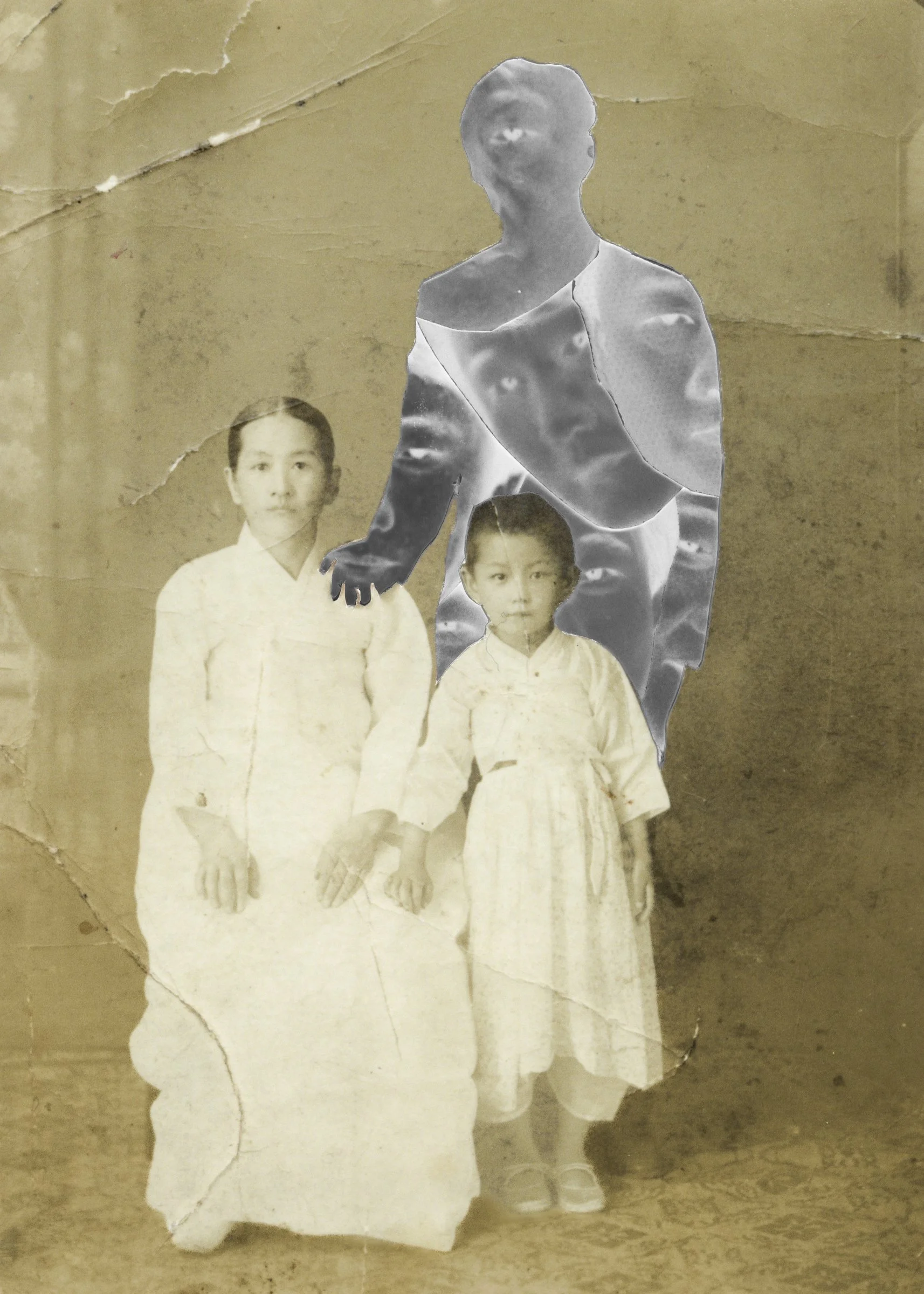
Cave Study II, 2026, pigment collage, 6” x 4.2”
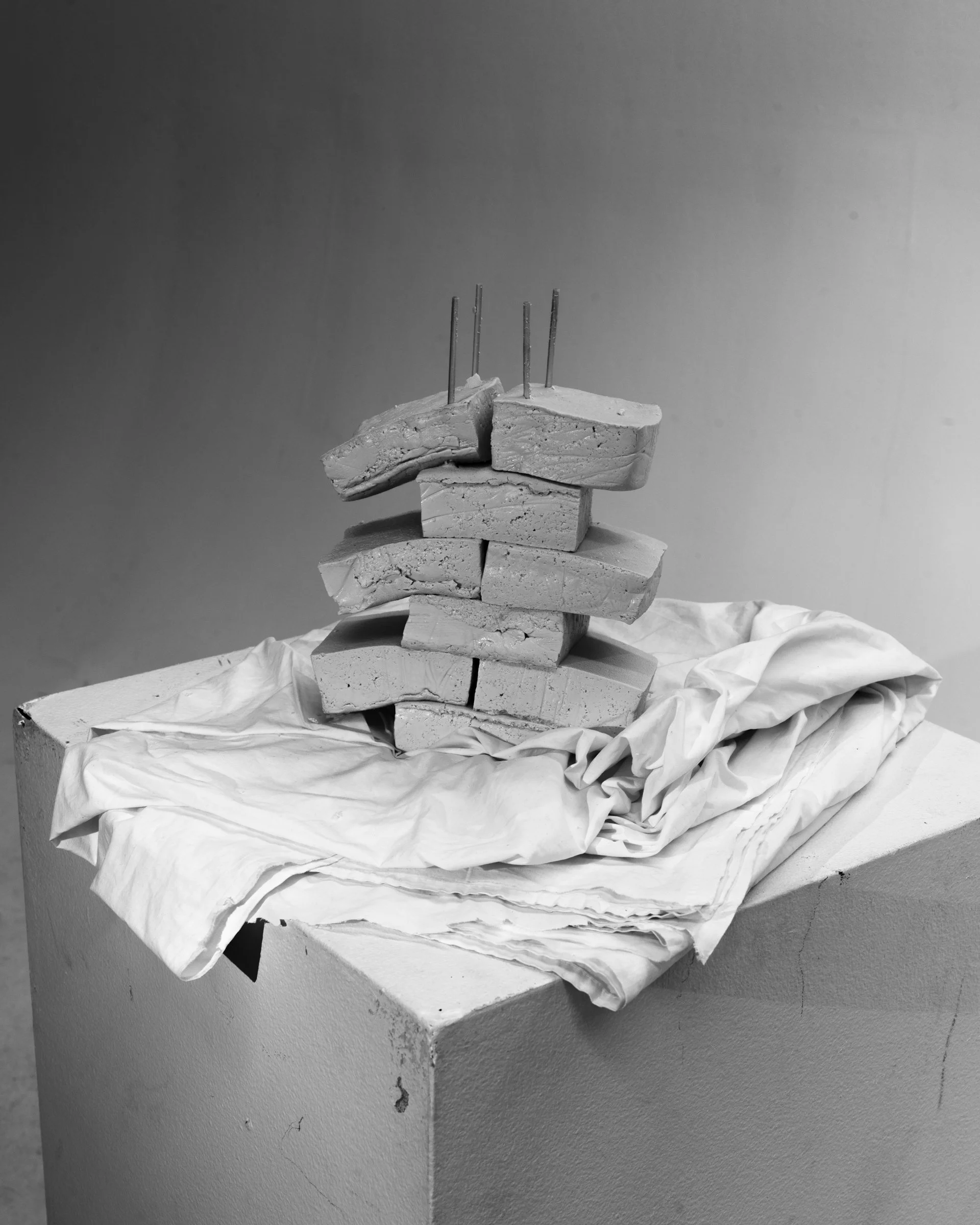
Hug and Pierce, 2025, pigment, 12.5” x 10”
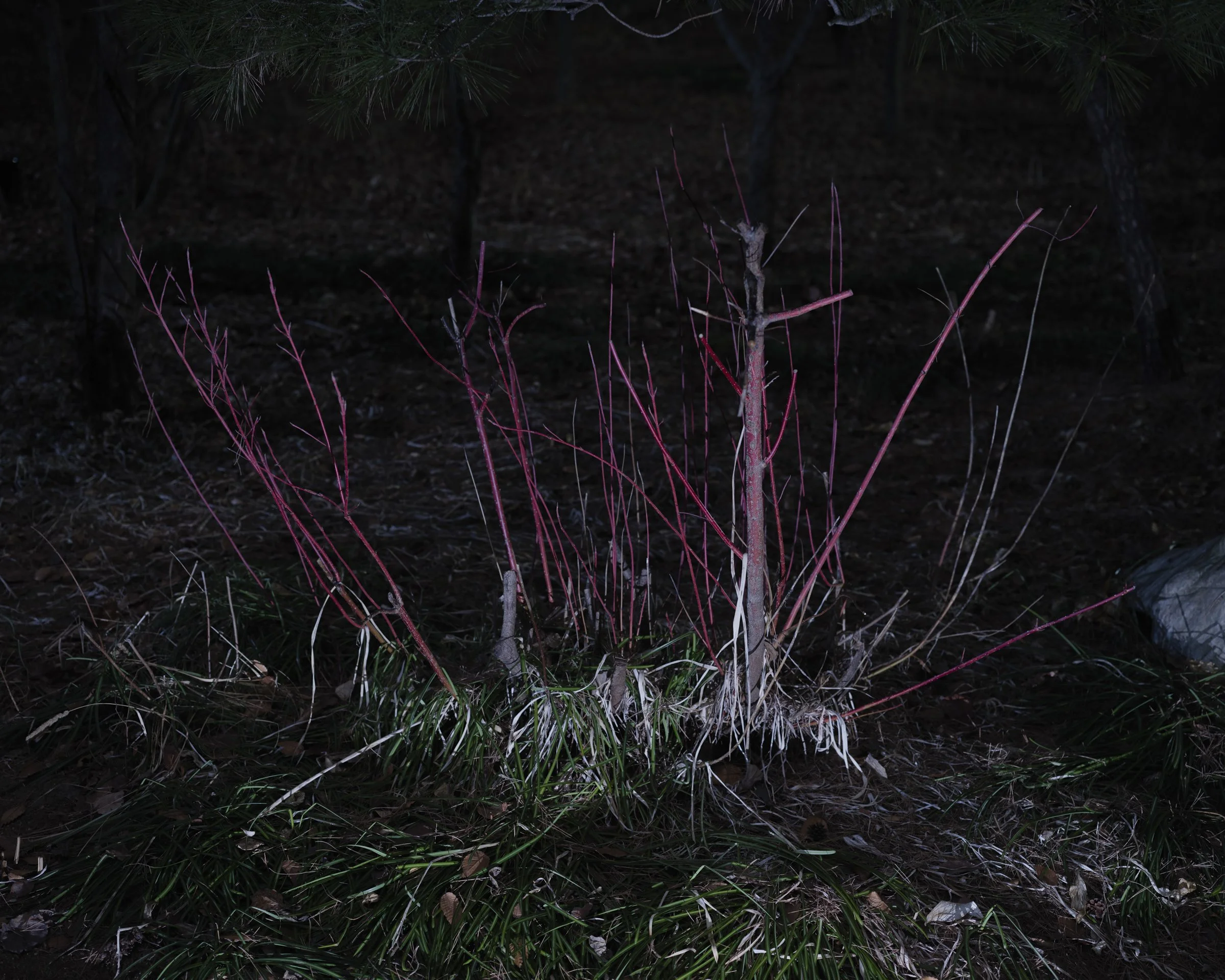
Praying in Cold, 2026, digital C-print, 20” x 16”
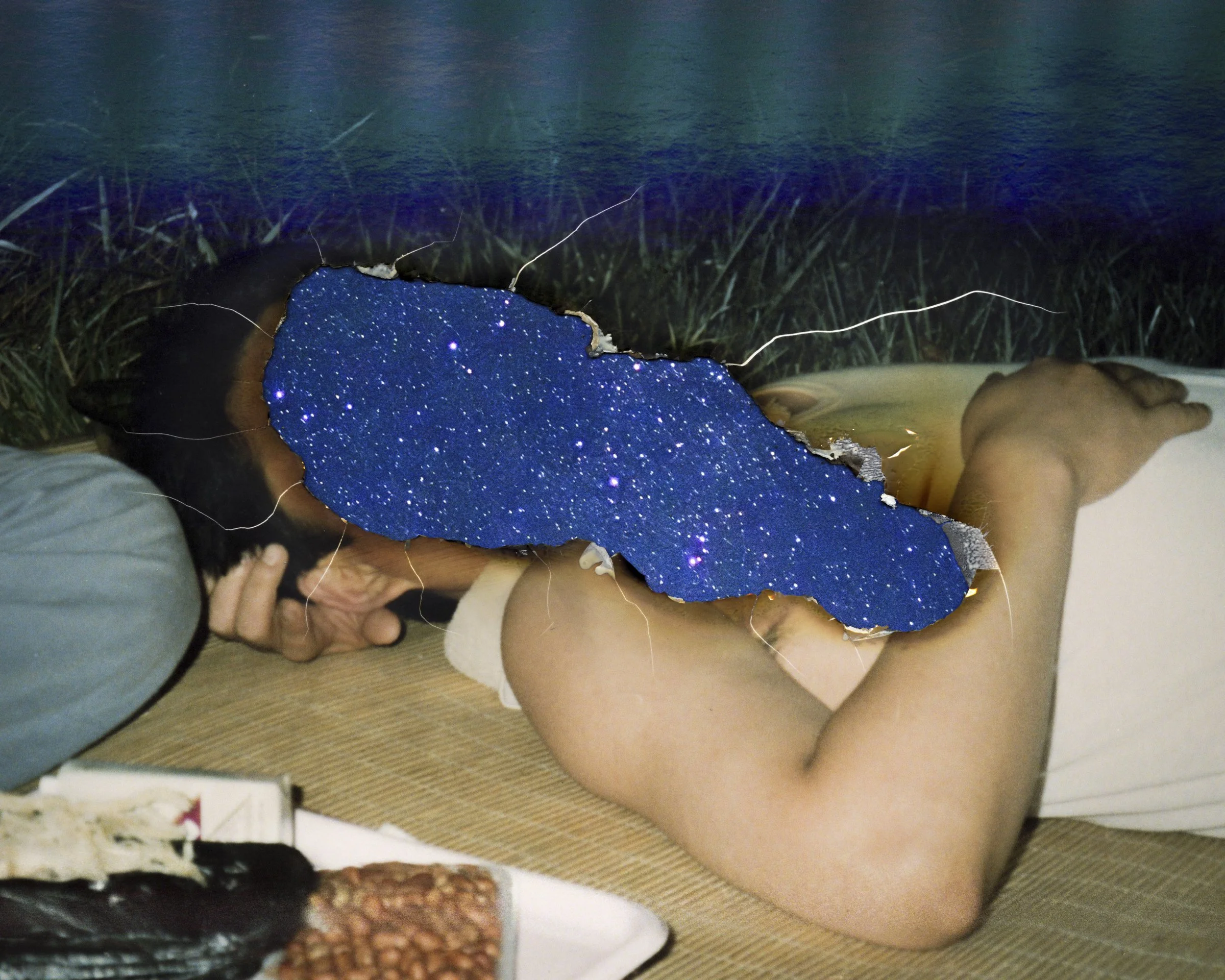
Reading Lips, 2026, pigment collage, 6” x 4.8”
《This Moon in Your Throat(삼킨 달)》 asks where unspoken grief lodges itself. Through night portraits of Koreans living in the United States, still lifes, and family-photograph collages, I explore the history carried in individual bodies and the emotions left unaddressed. Where in everyday life do the feelings we set aside, while moving toward success and survival, resurface? How do we feel losses we did not live through, and how do we live with emotions whose memory we cannot clearly claim as our own?
My paternal grandfather lost his first wife and three children during the January 4th Retreat in the Korean War. My father was born after that, and I learned of this through family stories. The deaths of people I never met shaped the family I was born into. What traces has this loss, which I never experienced, left in my body and emotions? Looking again at family photographs and attending to my bodily sensations became a way of following this question.
In the process, I turned to han, a Korean affect, and to Carl Jung’s concept of the shadow. The han I address is a state in which sorrow and resentment, longing and hope remain entangled, unresolved over a long time. Shadow work, the act of looking back at feelings we find hard to admit and have pushed aside, connects to what I attempt through photography. How much do family and social history shape what we take to be our own feelings?
I make the portraits at night, at the subject’s home, using long exposures. With all the lights off, I use only the glow of household appliances such as refrigerators, screens, and clocks. What reveals a person’s presence in the darkness is the light of these devices, products of modern capitalism. With this light, I seek to visualize the pressure that has been internalized in the body through the process of refining oneself for success and survival. During the shoot, I guide the subject to focus on their breath and bodily sensations. Some people wept as feelings they had been suppressing rose to the surface. I regard this process as a kind of shadow work conducted with a camera.
I make the still lifes by starting from concrete objects and blurring the meanings assigned to them. Through the arrangement, light, and form of objects, I explore pressure, anxiety, and loss, extending the range of the body that senses emotion and history into objects and spaces. When an object’s meaning is not fixed in place, the viewer’s own memories and emotions can enter into the interpretation of the image.
In the family-photograph collages, I cut, paste, and sometimes convert images to negatives, combining photographs from different periods to create a nonlinear time in which past and present overlap in a single frame. Through this, I explore how past losses haunt the present body and life like ghosts, and how our relationship to those losses might change.
Working with Koreans I meet in the United States carries the question beyond my own family’s story, and leads me to ask where feelings I once considered private touch a shared history and where they diverge from the experiences of others. When loss does not disappear but continues to change within each person’s body, what form can mourning take?
《삼킨 달(This Moon in Your Throat)》은 발화되지 못한 슬픔이 어디에 머무는지 묻는 작업이다. 나는 미국에 사는 한국인들의 밤의 초상과 정물, 가족사진 콜라주를 통해 개인의 몸에 남은 역사와 미처 다루지 못한 감정을 탐구한다. 성공과 생존을 향해 움직이는 동안 뒤로 미뤄 둔 감정은 일상의 어디에서 다시 모습을 드러낼까. 직접 겪지 않은 상실을 우리는 어떻게 느끼고, 누구의 기억인지 분명하지 않은 감정과 어떻게 함께 살아갈까.
나의 친조부는 한국전쟁 당시 1·4후퇴 과정에서 첫 아내와 세 아이를 잃었다. 아버지는 그 이후에 태어났고, 나는 가족의 이야기를 통해 이 사실을 알게 되었다. 만난 적 없는 이들의 죽음은 내가 태어난 가족의 형성에 관여했다. 내가 경험하지 않은 이 상실은 내 몸과 감정에 어떤 흔적을 남겼을까. 가족사진을 다시 바라보고 몸의 감각을 살피는 일은 이 질문을 따라가는 방법이 되었다.
이 과정에서 나는 한이라는 정동과 칼 융의 그림자 개념에 주목했다. 내가 다루는 한은 슬픔과 원망, 그리움과 바람이 오랜 시간 풀리지 않은 채 얽힌 상태다. 스스로 인정하기 어려워 밀어 둔 감정을 돌아보는 그림자 작업은 사진을 통한 나의 시도와 연결된다. 자신의 감정이라고 여기는 것에 가족과 사회의 역사는 얼마나 관여하는가.
초상은 인물의 집에서 밤에 장노출로 촬영한다. 모든 조명을 끄고 냉장고, 스크린, 시계 같은 가전제품의 불빛만 쓴다. 어둠에 잠긴 인물의 존재를 드러내는 것은 현대 자본주의의 산물인 기기들의 빛이다. 나는 이 빛으로 성공과 생존을 위해 자신을 다듬는 과정에서 몸에 내면화된 압력을 시각화하고자 한다. 촬영 중 나는 인물에게 호흡과 몸의 감각에 집중하도록 안내한다. 몇몇 인물은 눌러 두던 감정이 올라와 눈물을 흘리기도 했다. 나는 이 과정을 카메라로 진행하는 일종의 그림자 작업으로 바라본다.
정물은 구체적인 사물에서 출발해 그 사물에 부여된 의미를 모호하게 만드는 방식으로 제작한다. 사물의 배치와 빛, 형태를 통해 압박과 불안, 상실을 탐구하며, 감정과 역사를 감각하는 몸의 범위를 사물과 공간으로 확장한다. 의미가 하나로 고정되지 않을 때 관객 자신의 기억과 감정도 이미지를 해석하는 데 개입할 수 있다.
가족사진 콜라주에서는 서로 다른 시기의 사진을 자르고 붙이고 때로는 네거티브로 전환해, 과거와 현재가 한 화면에서 겹치는 비선형적 시간을 만든다. 이를 통해 과거의 상실이 현재의 몸과 삶에 유령처럼 출몰하는 방식, 그리고 그 상실과 맺는 관계가 달라질 가능성을 탐구한다.
미국에서 만난 한인들과의 작업은 내 가족의 이야기 바깥으로 질문을 이어 가며, 내가 사적인 것으로 여겼던 감정이 어디에서 공동의 역사와 맞닿고 타인의 경험과 어디에서 갈라지는지 묻게 한다. 상실이 사라지지 않고 각자의 몸 안에서 계속 변화할 때, 애도는 어떤 형태를 가질 수 있을까.